Factual source check: October 17, 2026. Next rule-review date: January 5, 2027. Editorial responsibility: Powerlifting Calculator; independent referee review pending.
What powerlifting equipment do you actually need for a competition? Less than many beginners think—but the items you bring must match your federation, division and the particular meet. A belt, knee sleeves and wrist wraps may help some lifters, but they are not substitutes for the required clothing, legal equipment and basic preparation.
This guide separates must-pack items, useful optional gear and equipped-only equipment. It explains how to choose your first belt, shoes and wraps without buying everything at once. The governing rulebook and meet director always take priority over a general checklist.
Powerlifting equipment checklist: the quick answer
If you are entering your first raw/classic meet, begin with the required clothing and a reliable pair of shoes. Consider a belt, wrist wraps and permitted knee sleeves only after checking your rules and practising with them.
| Item | Typical raw/classic meet | What to check before buying |
|---|---|---|
| Singlet or competition suit | Commonly required | Cut, material, logos, approval/brand requirements |
| T-shirt and underwear | Often regulated | Allowed material, sleeves, logos and fit |
| Footwear | Usually required | Sole, heel, permitted type and fastening |
| Socks, including deadlift socks | Meet-dependent; long socks often required for deadlift | Length, logos and placement |
| Powerlifting belt | Usually optional | Thickness, width, material and closure rules |
| Wrist wraps | Optional where permitted | Maximum length/width and approved products |
| Knee sleeves | Optional in eligible divisions | Length, thickness, construction and approval |
| Knee wraps | Not interchangeable with sleeves | Division-specific permission, dimensions |
| Equipped squat/deadlift suits and bench shirts | Not normal raw gear | Equipped division and federation approval |
Important: This table is a planning aid, not a claim that every federation requires or permits the same equipment. Confirm the current rulebook, division and organiser instructions before an equipment purchase or inspection.
IPF Classic equipment limits at a glance
Official baseline: IPF Technical Rulebook, effective March 1, 2026, version 3; checked October 17, 2026. These are maxima, not a guarantee that a particular brand or model is approved. The IPF approved list remains a separate requirement.
| Equipment | Rule / limit | 2026 rulebook section |
|---|---|---|
| Belt | Maximum 13 mm thick, 10 cm wide | § 3.6 |
| Shoes | Required; sole ≤5 cm at any point; loose inner sole ≤1 cm; fasten securely | § 3.7 |
| Knee sleeves | Maximum 7 mm thick, 30 cm long; approved model | § 3.8 |
| Wrist wraps | Maximum 1 m long including fastening tabs, 8 cm wide; remove the thumb loop for the lift | § 3.9 — Wrist |
| Knee wraps | Equipped competitions only; maximum 2 m long, 8 cm wide | § 3.9 — Knee |
| Deadlift socks | Shin-length socks required | § 3.5 |
| Thumb tape | Up to two layers around thumbs; no grip assistance; permission required elsewhere | § 3.11 |
Source: 2026 IPF Technical Rulebook v3, sections 3.5–3.11, pp. 16–18; inspection §3.12, p. 19; substances §3.14, p. 20. Next review for January 5, 2027.
Required versus optional powerlifting gear
First-meet recommendation
Start with a legal singlet, T-shirt, shoes and shin-length deadlift socks. If you want a belt, a comfortable, eligible 10 mm model is a sensible starting point; try 13 mm before paying extra. Skip wrist wraps until training shows you need them. Buy knee sleeves only once you know your division's model requirements. This is a practical starting kit for an IPF-style Classic meet, not a universal shopping mandate.
Buy the essentials first
For a novice lifter, the priority is being able to step on the platform legally: a suitable singlet where required, an allowed T-shirt and underwear, appropriate footwear and compliant socks. A competition is not the place to find out that an otherwise comfortable training shirt has an illegal logo or that your footwear does not satisfy the event rules.
Do not assume that a label saying “powerlifting approved” guarantees eligibility. An item may satisfy a broad design rule yet still be ineligible for an event that requires specific manufacturers, models or certification.
Add equipment based on your training
A belt may improve your feeling of trunk support when you brace. Wrist wraps can make certain bench or squat positions more comfortable. Knee sleeves may provide warmth and a familiar feel; they can also be awkward if the fit is wrong. You do not need all three to compete, and none should be introduced for the first time on meet day.
Choosing a powerlifting belt: 10 mm versus 13 mm
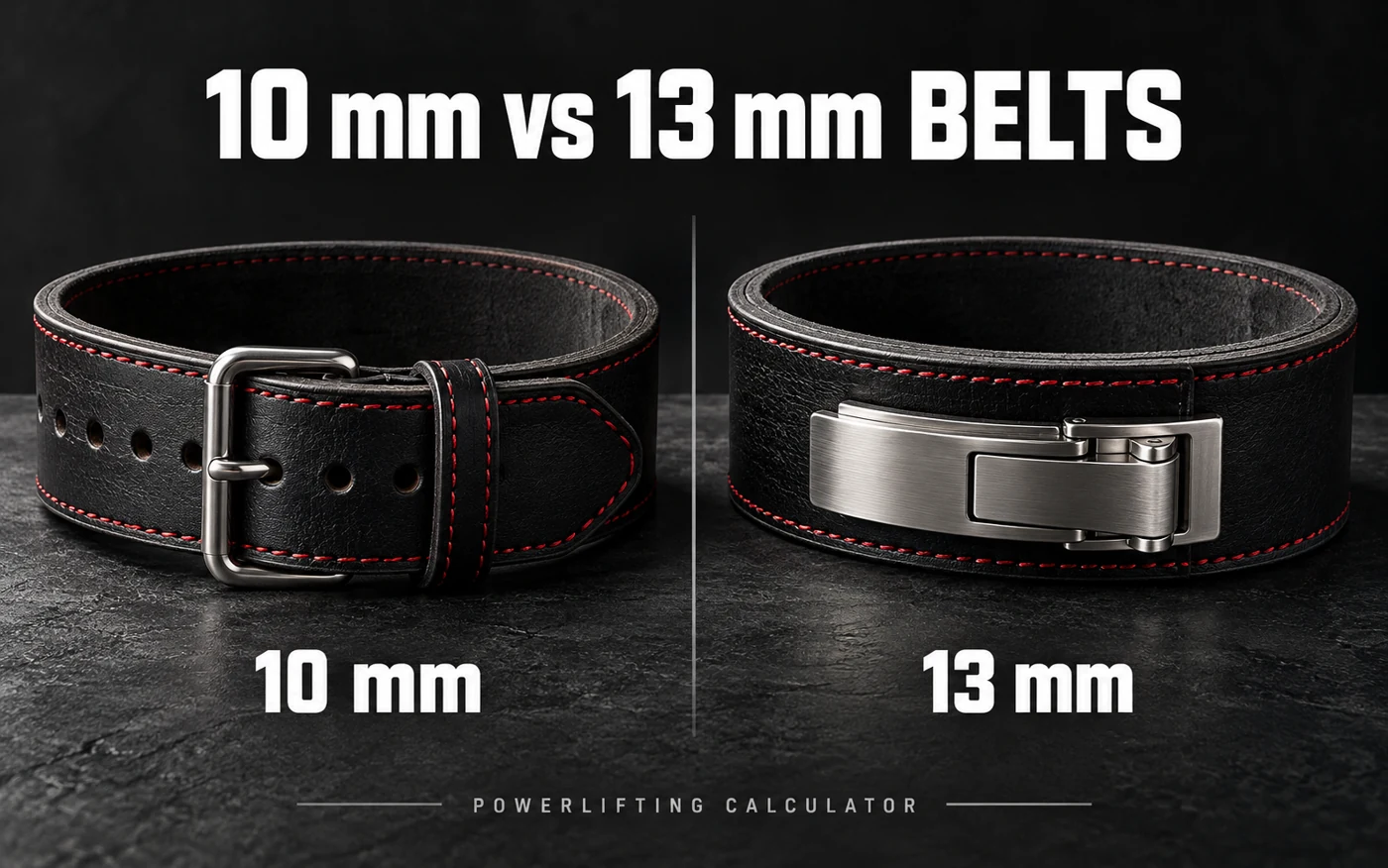
For many lifters, a good 10 mm belt is a practical starting point: it generally feels less rigid and may be easier to position for both squat and deadlift. A 13 mm belt is stiffer, but stiffness is not a guaranteed performance advantage. Thicker is not automatically better, especially for shorter torsos or lifters who struggle to reach a comfortable deadlift start position.
Prong versus lever
- Single-prong belt: straightforward, commonly adjustable without tools, convenient if you change tightness between lifts.
- Lever belt: quick to fasten at a repeatable setting, although traditional levers may require adjustment to change the circumference.
- Adjustable lever: offers faster size changes on some designs, but check whether that particular belt meets the relevant competition rules.
Try the belt in squat, bench and deadlift sessions. It should allow effective bracing and positioning rather than digging painfully into your ribs or hips. Measure according to the manufacturer's sizing instructions and check the current rulebook's maximum belt dimensions.
Knee sleeves versus knee wraps: what is the difference?
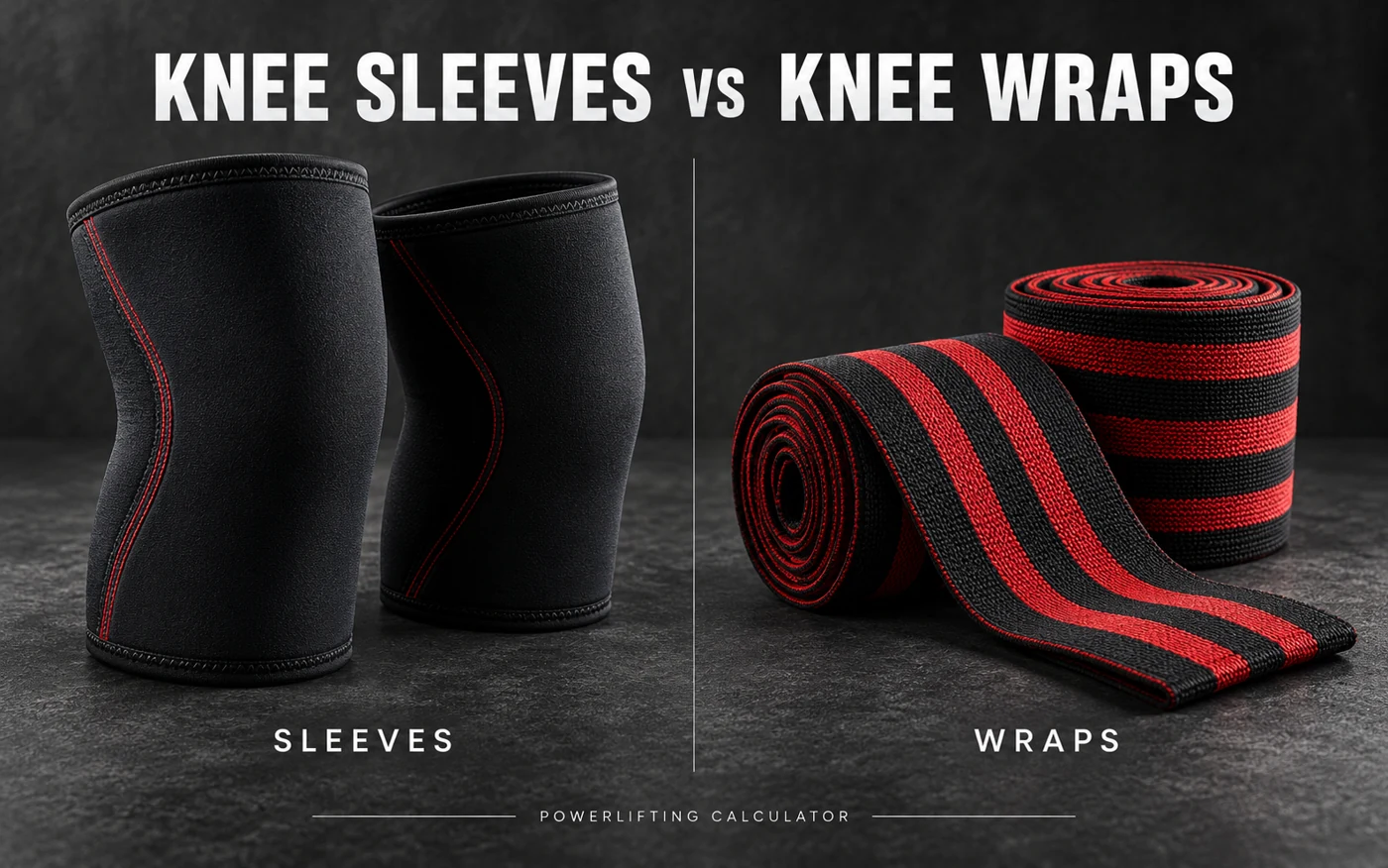
Knee sleeves are generally neoprene sleeves worn around the knee; knee wraps are long elastic wraps wound around the joint. They are different categories of equipment and cannot simply be substituted because both are worn on the knee.
For IPF Classic, choose eligible sleeves; knee wraps belong in equipped competition. You cannot combine both. Sleeve construction and model eligibility matter alongside the dimensions in the table. Other organisations define raw and wraps categories differently; the federation comparison below explains two important examples.
When buying sleeves, prioritise legal specifications and fit. Very tight sleeves that you cannot position consistently—or that distract you from the lift—are poor choices. Practise squatting to competition depth in the exact sleeves and shoes you plan to use.
IPF knee sleeve update 2027: seven affected listings
The International Powerlifting Federation (IPF) published a notice on October 14, 2026 concerning seven specific stiff knee-sleeve listings. The prohibition takes effect January 1, 2027 and concerns competitions at national and international level, including championships, cups and tournaments, according to the notice. The IPF places implementation responsibility on regional technical chairs, member nations and their national technical chairs.
The affected listings remain permitted through December 31, 2026, subject to other applicable requirements. This announcement does not automatically govern WUAP, USA Powerlifting or every independent meet. Do not generalise it to all 7 mm knee sleeves.
| Manufacturer / model | IPF ID |
|---|---|
| INZER ErgoPro and ErgoPro Kona | 270 |
| Titan Knee Sleeves (TKS) 7mm | 127 |
| ONI Knee Sleeve Pro (Equipped & Classic) | 113 |
| Strength Shop 7mm Inferno PRO Extra Stiff Black | 221-1 |
| Fortex 7mm Extra Stiff (various colours) | 205 |
| A7 Hourglass Rigor Mortis (various colours) | 100 |
| Stoic Heavy Knee Sleeve | 73 |
Does this ban every 7 mm knee sleeve?
No. The announcement names seven equipment listings, including two INZER variants under one ID. Thickness alone does not identify an affected model. Match the exact manufacturer, model and ID rather than assuming every sleeve from a named brand is excluded.
What should competitors do?
- Check the date and federation of your next meet.
- If your meet falls under the stated IPF competition scope on or after January 1, 2027, compare the exact sleeve model and IPF ID with the notice.
- Check subsequent IPF notices and the latest approved-equipment list before replacing your sleeves.
- Ask the meet organiser or technical chair if the event’s scope is unclear.
Official source: IPF notice dated October 14, 2026. For general clothing and gear specifications, see the IPF technical rules and the approved list.
What about meets before January 2027?
As of this article’s October 17, 2026 source check, the IPF notice allows the named listings through December 31, 2026. That statement does not waive other equipment requirements. Check your event date, exact model and the latest federation notices before purchasing or competing.
Which competition scope does the notice specify?
The announcement identifies national and international championships, cups and tournaments. This article retains that wording rather than extending it to every event associated with an IPF member organisation. If the status of a particular meet is unclear, get a ruling from its organiser or technical chair.
Should you replace your sleeves now?
If you already own an affected model and plan to compete within the stated scope from January 1, 2027, arrange an eligible alternative early enough to practise in it. Check the current approved list and subsequent notices before buying. This article does not endorse a replacement model or guarantee that a particular product will remain approved.
Do you need wrist wraps?
Wrist wraps are optional in many divisions and are commonly used for bench press and sometimes squat. They do not fix an unsuitable grip or technique. Choose a length and stiffness that you can apply consistently and that do not restrict the hand position needed for your lifts.
Federations may specify maximum dimensions and exactly where the wrap may sit on the wrist. In IPF, the wrap may extend at most 10 cm above and 2 cm below the wrist centre, with a maximum total covering width of 12 cm. The thumb loop must be off the thumb and fingers during the lift; do not combine wraps with sweatbands (§3.9). Check whether the intended model is on any required approved list before ordering it. IPF approved equipment information.
For a broader competition timeline, see our powerlifting meet prep guide.
Powerlifting shoes, deadlift shoes and socks
Squat shoes: raised heel or flat sole?
A raised, firm heel can make a preferred squat position more accessible for some lifters, while a flat stable sole suits others. The correct choice depends on mobility, body proportions, squat style and training familiarity. Neither style is universally superior.
Deadlift shoes
Many lifters prefer a stable, low-profile shoe for deadlifting. Avoid assuming you can compete barefoot or in socks alone; some events explicitly require footwear. Check the sole and fastening rules and practise on a similar surface before the meet.
Do not forget the socks
Socks are easy to overlook. In IPF, shin-length socks are required for deadlifting and must not touch the knee sleeves. WUAP also requires shin coverage and a gap from knee coverings. Pack at least one spare compliant pair; avoid relying on an unfamiliar sock height on the platform.
Singlet, T-shirt and undergarments
A singlet is often the most important purchase that casual gym lifters do not already own. Choose one that lets referees see the required body positions and complies with the event's clothing rules. Test your squat setup, bench arch and deadlift start position in it.
Shirts and undergarments can also be regulated. Read the relevant rules for sleeves, pockets, seams, support, logos and permitted fabrics. If in doubt, send the organiser the product link before buying.
Chalk, medical thumb tape and grip accessories
Pack ordinary lifting chalk only if you need your own supply. In IPF, magnesium carbonate is one of the permitted substances on the body and attire, but not on wraps. Do not put chalk or resin on the soles of your shoes, and do not apply substances to the competition equipment. Oil and grease are prohibited. Ask the organiser before relying on liquid chalk: a product's other ingredients and venue policy can matter (IPF §3.14).
Thumb tape is regulated. IPF allows up to two layers of medical tape around the thumbs, but tape cannot assist in holding the bar. Tape elsewhere needs official permission; have any injury taping checked before you lift (§3.11). Do not treat ordinary sports tape, a wrist support and a legal wrist wrap as interchangeable.
Leave deadlift straps, grip hooks and grip pads out of your platform kit. They are training accessories, not an alternative to gripping the bar with both hands in IPF competition. Practise your intended legal grip in training. Wrist wraps support the wrist and do not fasten your hand to the bar; the similar names often confuse beginners. For execution and lockout, read our competition deadlift rules guide.
What changes in equipped powerlifting?
Equipped lifting may allow supportive suits, bench shirts and specific wraps, depending on the federation and event. It is a separate equipment decision—not a shopping upgrade from raw lifting. These items require specific practice, technique, handling and event-rule checks. If you registered for a raw/classic division, do not assume supportive equipment is legal simply because it appears in a powerlifting shop.
Choose equipment by federation and division
Use the rules for the federation on your entry confirmation. “Raw” does not identify one universal equipment category.
| Federation / division | What changes your buying decision | Primary reference |
|---|---|---|
| IPF Classic | Non-supportive singlet; optional eligible belt, wrist wraps and knee sleeves. Knee wraps are for equipped competition. Product eligibility and dimensions both matter; check the dated 2027 sleeve notice. | IPF v3, effective March 1, 2026, §3; approved list. |
| USA Powerlifting | Raw allows knee sleeves. Knee wraps are for equipped or raw-with-wraps competition. The USAPL approved list covers supportive squat/deadlift suits and bench shirts; other gear must meet its specifications. Do not import IPF's product-list requirements. Sleeve application must be unassisted under the cited USAPL rules. | USAPL Rulebook v2026.2, updated February 9, 2026, in effect January 1, 2026; §§3.1.4–3.1.7, 3.11, 3.13. |
| WUAP RAW | The cited rules allow knee wraps or knee gauntlets in squat and bench, but neither in raw deadlift attempts. This differs substantially from IPF Classic. A non-supportive singlet is required; supportive briefs and shirts are excluded from RAW. | WUAP Rules v3.5, March 1, 2026, §§5.1, 5.2, 5.6 and 5.10; official link on WUAP's Documents section. |
For an AWPC-branded national event, confirm which organisation and rulebook the organiser actually uses. The name alone does not establish its relationship to WUAP, WPC or IPF. Send the organiser the exact model and your entered division when asking for equipment advice.
Budget priorities: what to buy first
Reuse stable training shoes if they meet the rules. Buy a compliant singlet and any missing mandatory clothing before premium accessories. Then compare a belt's fit, construction, return policy and federation eligibility. A basic model you can brace in is more useful than an expensive model that prevents your normal start position.
This article contains no affiliate links or product-specific sales recommendations. Prices are omitted because local taxes, shipping and model approvals vary; compare the total delivered cost and return conditions.
- Essentials: legal singlet/clothing, footwear and required socks. Buy these first.
- Useful upgrades: a well-fitting legal belt; wrist wraps or knee sleeves only when they genuinely suit your training.
- Specialist gear: premium belts, additional footwear, multiple wrap options and equipped-only products. Buy only when you have a clear reason.
If money is tight, borrow eligible equipment where organisers allow it, but test the fit beforehand and confirm it complies with the rules. Do not buy a premium approved item solely because a sponsored athlete uses it.
Powerlifting meet-day packing checklist
This list works on a phone or as a paper checklist. Screenshot it, or use your browser’s Print function and choose the checklist pages. Tick an optional item only if it applies to your division and you have practised with it.
- ☐ Singlet and legal T-shirt/undergarments
- ☐ Competition shoes and spare laces
- ☐ Compliant socks and spare pair
- ☐ Belt, wrist wraps, sleeves or wraps, if permitted and used
- ☐ Optional chalk and permitted medical thumb tape; no grip straps in the platform kit
- ☐ Any equipped-only gear required for your division
- ☐ Photo ID, membership details and entry confirmation
- ☐ Meet schedule, weigh-in instructions and venue details
- ☐ Squat/bench rack settings and opening attempts, if requested
- ☐ Familiar food and drinks, towel and comfortable layers
- ☐ Phone, charger, attempt notes and coach/handler contact details
Need a printable packing list? Get the free First Powerlifting Meet Checklist.
Before you buy: the 3-step decision
- Identify your federation, competition division and event date.
- Match each item to the relevant dimensions, approved-model list and the 2027 IPF notice where applicable.
- Wear the full kit in practice, then pack spare socks, shirt and laces.
Inspection: arrive within your organiser’s equipment-check window with clean, untorn kit. Lay out the singlet, shirt, underwear, shoes, socks and accessories; keep the model label visible. Under IPF §3.12 all applicable personal equipment is subject to inspection, and passing an initial check does not make an illegal item legal. Carry a spare compliant shirt and socks. Ask about a questionable product before the meet, not when your attempt clock is running.
Once your gear is ready, choose opening attempts with our powerlifting attempt planner.
Frequently asked questions about powerlifting equipment
Do I need a lifting belt for my first powerlifting meet?
Not necessarily. A belt is optional in many raw divisions. Legal clothing and footwear are usually more urgent. If you choose to wear a belt, train with it well before the event.
Are 7 mm knee sleeves allowed in powerlifting?
Some federations, including the IPF, specify 7 mm as a maximum sleeve thickness, but dimensions alone do not guarantee eligibility. Approved lists, construction and your division can also matter.
Can I use knee wraps in raw powerlifting?
It depends on the federation's definition of raw, classic, wrapped and equipped divisions. Never assume knee wraps are permitted based only on the word “raw.” Check your event rules.
Do powerlifting shoes have to be a specific brand?
Not universally. Rules may regulate footwear style and construction; some other equipment categories may be subject to approved lists. Check the latest applicable rules.
Is a 13 mm belt better than a 10 mm belt?
Not automatically. A thicker belt is generally stiffer, but comfort, torso proportions, movement and legal specifications determine whether it is a sensible choice.
What should I buy first for my first meet?
Start with mandatory, competition-legal clothing and shoes. Add optional gear only when you know it helps and is allowed at your event.
What changes for stiff knee sleeves in 2027?
The restriction begins January 1, 2027 within the competition scope set out above. Check the exact models and IDs in our IPF knee-sleeve update; do not infer eligibility from thickness alone.
Where can I check approved powerlifting equipment?
Start with your federation's current technical rulebook and, if one exists, its approved equipment list. Verify the meet organiser's instructions too.
Build your kit around the division you entered, practise in it, and pack it before the final evening. Equipment should make your meet more predictable.
Sources and editorial review
Source check completed October 17, 2026. Editorial responsibility: Powerlifting Calculator. This is an editorial reference, not a federation ruling; independent technical review by a qualified referee is pending. Next federation-rule review: January 5, 2027.
- IPF Technical Rulebook, effective March 1, 2026, version 3: §3 Personal Equipment, especially §§3.1–3.12 and 3.14; §4.3 Deadlift.
- IPF approved apparel and equipment; model eligibility must be checked for the event date.
- IPF knee-sleeve notice, October 14, 2026.
- USA Powerlifting rulebook and supplement index: v2026.2, §3 Personal Apparel and Equipment.
- WUAP Rulebook v3.5, March 1, 2026: §5 Costume and Personal Equipment.